I've had to deal with physical aggression twice recently. I took both incidents as opportunities to put my Stoic skills to use. I'll discuss one of the incidents here in case it's useful to you.
A close associate was overly familiar with me physically. I explained that I didn't like it, and that for our friendship to work he would have to stop. The person protested. I said something like "Look, I really like you and I know you don't mean anything by it. I'm just not that way."
There were others there who backed me up and said they didn't like it either. He does the same thing to them, apparently.
I may as well say it: many young men (one generation younger than my own) seem to bond with each other by pretending to be homosexual. "Pretending" is used pretty loosely here. I know actual homosexuals and none has ever groped me. They've been very respectful. Anyway, it's like that. I'm not into it. I don't find it funny.
"If it was me I would have taken that guy down."
I couldn't. It would have been no contest. I'll fight if it crosses the line but it would be more of a "go down swinging" kind of thing. Also I like the guy and I don't think he means any harm. And suppose I could easily take him down? I would hope that I would try this strategy first in either case. It's more rationale.
I did tell him that if he is gay and not out we could talk about it. This distressed him. He said "if I was gay I could do so much better than you." I laughed at that. I enjoyed his distress, but I meant what I said. Maybe the guy is gay and just can't handle it. We shall see.

First say to yourself what you would be; and then do what you have to do.
Showing posts with label Dealing With Other People. Show all posts
Showing posts with label Dealing With Other People. Show all posts
Monday, March 21, 2016

Monday, March 14, 2016
Fire Your Friends
This article from Motivated Mastery is a quick treatment of the thought of Seneca. One thing that jumped out at me was this:
Those people who, contrary to Theophrastus’ advice, judge a man after they have made him their friend instead of the other way around, certainly put the cart before the horse. Think for a long time whether or not you should admit a given person to your friendship. But when you have decided to do so, welcome him heart and soul, and speak as unreservedly with him as you would with yourself.
Respect. You and your friend will, ideally, share mutual respect. You don't seek advantage from each other and you make each other better.
And if not? If you have admitted a person to your friendship hastily?
I think you fire them.
I've done this. It was messy. I was emotional. I'd be less emotional now, I think, but one thing that Stoicism has done for me is that I have become pickier with who I spend my time with in the first place, so the problem hasn't arisen.
Those people who, contrary to Theophrastus’ advice, judge a man after they have made him their friend instead of the other way around, certainly put the cart before the horse. Think for a long time whether or not you should admit a given person to your friendship. But when you have decided to do so, welcome him heart and soul, and speak as unreservedly with him as you would with yourself.
Respect. You and your friend will, ideally, share mutual respect. You don't seek advantage from each other and you make each other better.
And if not? If you have admitted a person to your friendship hastily?
I think you fire them.
I've done this. It was messy. I was emotional. I'd be less emotional now, I think, but one thing that Stoicism has done for me is that I have become pickier with who I spend my time with in the first place, so the problem hasn't arisen.
Monday, February 15, 2016
The Stoic And Online Etiquette
I was on a certain website recently and decided to troll members of the opposition. I took their opinion and fed it back to them in its most extreme incarnation. I presented myself as a political commisar enforcing an absurdity. I was effective. I silenced people. I stayed up until 2 a.m.
That's a problem.
Tonight I was playing a simulation (it simulates something I do in real life). There was a competition involved. There are people competing in it who have been competing every night for ten years. They are very impressed with themselves and they insulted me. I responded in kind. Effectively. More effectively than them. Edit: No I didn't. I ignored them, got angry and tossed out an effective one-liner. They left me alone after that. It was ONE LINE. I'm aggrandizing myself here. It was satisfying.
Then it wasn't.
What kind of Stoic am I if I spend my time in the dirt with everybody else? Shouldn't I pull myself out of the dirt, and then turn around and help my brothers and sisters out of the dirt?
I need to work this out. Time for a new project.
That's a problem.
Tonight I was playing a simulation (it simulates something I do in real life). There was a competition involved. There are people competing in it who have been competing every night for ten years. They are very impressed with themselves and they insulted me. I responded in kind. Effectively. More effectively than them. Edit: No I didn't. I ignored them, got angry and tossed out an effective one-liner. They left me alone after that. It was ONE LINE. I'm aggrandizing myself here. It was satisfying.
Then it wasn't.
What kind of Stoic am I if I spend my time in the dirt with everybody else? Shouldn't I pull myself out of the dirt, and then turn around and help my brothers and sisters out of the dirt?
I need to work this out. Time for a new project.
Saturday, November 7, 2015
Brian Martin and Irvine's Insult Pacifism

Brian Martin has written an excellent review of William Irvine's method of "insult pacifism." This is the "starve a bully" theory. I know that Irvine takes a lot of heat from some Stoics for his somewhat unorthodox take on the philosophy, but I've found him to be a very good source of wisdom. I actually emailed him about a personal issue and he responded, and his advice was very useful.
When dealing with low-level bullies I have found his insult pacifism to be fairly effective. What this involves is to either ignore an insult, say "thanks," or agree and amplify.
"You're fat."
--------
"You're fat."
"Thanks."
"You're fat."
"I'm enormous!"
I would add to this the "laugh along with them" technique.
"You're fat."
"Ha ha ha! Anyway, about this report..."
I'm not a pacifist. I think that there are times when a threat needs to be met head-on. Still, for low-level bullying I've found insult pacifism to be very effective. This is especially true with adult bullies.
What a bully wants is your humiliation. They want to feel superior to you. If you are nonreactive then you starve them without openly challenging them, and they'll often hunt somewhere else. In addition, anybody who sees your non-reactivity is likely to view you as more mature, more in control. That's also useful, because bullies don't just want to humiliate you, they want to do it in front of an audience.
In my particular social setting it is highly unlikely that a bully will actually assault me, and it is very likely that bullying behavior will be cloaked as friendly teasing. Typically this teasing happens in a group (in my experience); adult bullies generally want to raise their stock in front of an audience; they're very unlikely to bully people one-on-one.
Insult pacifism provides a mild reproof. The bully feels a little awkward, but not so awkward that he or she will be rejected from the group. The group will just think that the bully is having an off day, or perhaps feels a little cranky.
That's an important thing to remember in any conflict, actually. Always keep the audience in mind. You probably won't change the other person's mind, but you certainly can bring the undecided over to your side.
That said, I've gone nuclear on adult bullies three in my life. In all three cases I talked to them privately and said in no uncertain terms that I didn't like how they treated me. In all three cases they became immediately conciliatory. One guy admitted that he was doing it and said that he needed to grow up. We hugged. The second guy became incoherent and barely spoke to me after that, and when he did he was always polite. The last guy denied bullying me at all and thought I was a little crazy, and then took great pains to point out his own flaws. That's when I realized how sad and lonely his life seemed to him.
I had to actually think about that one. Was I wrong? I don't think so, but I talked to a friend of mine who was a part of the bully's audience and he thought it was just heavy teasing.
Maybe. Maybe not. Either way the guy backed off.
Now if I were a sage I would do as Marcus Aurelius advises.
“Begin each day by telling yourself: Today I shall be meeting with interference, ingratitude, insolence, disloyalty, ill-will, and selfishness – all of them due to the offenders’ ignorance of what is good or evil. But for my part I have long perceived the nature of good and its nobility, the nature of evil and its meanness, and also the nature of the culprit himself, who is my brother (not in the physical sense, but as a fellow creature similarly endowed with reason and a share of the divine); therefore none of those things can injure me, for nobody can implicate me in what is degrading. Neither can I be angry with my brother or fall foul of him; for he and I were born to work together, like a man’s two hands, feet or eyelids, or the upper and lower rows of his teeth. To obstruct each other is against Nature’s law – and what is irritation or aversion but a form of obstruction.”
So ultimately a Stoic will practice insult pacifism because the Stoic recognizes that the bully simply doesn't know any better. The bully is our brother. We are meant to live in harmony. That's a beautiful thought.
That's the target; that's what we are to work toward.
But then again I'm not a sage. And sometimes, if I'm honest, I'm the bully.
Physician heal thyself.
Sunday, July 12, 2015
On Losing One's Mojo
My advice to a reddit user who had lost his mojo:
So there was an incident. You got sucked in. You made mistakes.
That's in the past now. You can't change it, so you might as well get something out of it, right? And besides, did you think that you're a sage? You're not. I'm not. Nobody on this forum is. So these things are going to happen. You will never be perfect; you'll just approach perfection, if you study and practice regularly.
I would make a T-chart. I'd actually write it in pen and paper. It helps focus the mind (like Marcus's journaling). On the left write "What did I learn?" On the right write "What can I fix?"
Perhaps you learned that you would rather not express political opinions when you don't have to, because nobody gets much out of it. Perhaps you can somewhat fix things by apologizing to Ted. By the way, if you apologize I recommend doing it once, completely, and then never again. They accept it or they don't, but groveling won't help anyone.
You seem like a person who might hold himself to a high standard. That is certainly useful, but then again there is a freedom in realizing that you're not perfect and you never will be. Accepting this lets you view yourself with some sympathy. Like Seneca says, it allows you to become a better friend to yourself. As Stoics we are to be kind to our fellow people, but we are also called to be kind to ourselves. Correcting our faults need not come with a big dose of guilt. Look at the Meditations; here's a man who is honest with himself without beating himself up. He writes to himself as he would write to a close friend.
As for your work schedule, your diet, your working out etc. I would view this as an opportunity. It's good training. If you can force yourself to muster some discipline and follow a schedule in the bad times it will be MUCH easier to do in the good times. It will build character and expand the soul.
And consider this: 1.5 months ago when you were happily rolling along were you REALLY being tested? Were you REALLY developing as a person? Perhaps you were, but not as much as you are about to. Easy living is NOT what builds a life, right? This is. This is where a strong soul is forged. How else would it happen? How can you grow if you're never tested?
Since I am a Stoic theist* I'd also say that God has given us the tools we need to achieve virtue. Epictetus said this too. You have all you need. It's reassuring when you think about it like that.
Finally I would be really interested to hear back from you. Did any of our advice work? Did you learn something that we can use? Please keep in touch. Better yet maybe start a blog and let us follow your progress. Watching somebody break through (and you WILL break through) is heartening.
*No offense to my atheist brothers and sisters! Big tent! Big tent!
Saturday, March 21, 2015
The Hipster And The Stoic

There's a new coffee bar where I live called Archive. My wife and I enjoy coffee and we enjoy playing cards in coffee shops, so we walked in and sat down. It was fun. The proprietors have a real eye for detail.
For starters everything looks reclaimed. The walls seem hung with old beams from leather boot factories. There's a very interesting image on the far wall made out of thread wound around nails. I looked around before I poked it. Nice tension; quality craftsmanship.
Then there are the barristas, who look a lot like civil war veterans. Their beards are long and well kempt, and the whitewalled sides of their heads grow into slick-backed demi-pompadours. Jeans are made of selvage denim and cuffed. Footwear looks like something paratroopers strapped up before jumping over Normandy. Sleeves are rolled and suspenders bring it all together.
They're very friendly and they know what they're talking about when it comes to coffee. They view themselves as artisans, and the product justifies that view.
We enjoyed it.
Still, nagging at the back of my brain, a small voice kept saying "poseurs."
Why? Why did I feel a need to judge these very kind, sincere people?
One of the great benefits of Stoicism is that it cultivates an ability to separate oneself from one's thoughts and examine them from the outside. I think this is what Seneca means when he says:
"What progress have I made? I am beginning to be my own friend.’ That is progress indeed. Such a people will never be alone and you may be sure he is a friend to all."
First, I felt a little threatened. Hipsters often present as intellectuals. Sometimes it's a calculated pose, but in my experience it's often not. Often they really are people who read and think. They're into alternative lifestyles and alternative philosophies... What if they know something that I don't? What if they're smarter?
A number of them definitely are smarter. Isn't that good? Engaging in conversation with a smart person who knows something that I don't should be improving, not threatening. I have a feeling that a number of young Stoics I interact with online might fit into the hipster category. We're all reviving a nearly extinct philosophy, after all. That's pretty fringe.
I find that these young Stoics really know their stuff. They're often not weighed down by family and career in the same way that I am. They have time to think. When I listen to them and offer them friendship we both benefit. When I refute them and offer sarcasm neither of us benefit.
So feeling threatened by hipsters is not a worthy thought. Moving on...
Second, I felt out of place. I didn't belong. I didn't dress like them, for starters. I keep a short beard and I wear those sort of 60's style glasses because those are about the only kind you can get anymore, but I was just wearing some old leather shoes, battered jeans and an old button up shirt... hang on...
There I am in a beard and horned rimmed glasses sipping fair-trade yirgacheffe coffee and playing cards with my wife on a reclaimed work bench while people talk about art and philosophy all around me...
Am I a hipster?
Does it matter? Maybe a good cup of coffee is just a good cup of coffee, and good conversation is just good conversation. Maybe choosing to think this way will make me more of a friend to all.
* * *
I release the above picture into the public domain, because that's the kind of guy I am. This one's for you, StoicBeCuz.
Monday, February 16, 2015
A Public Face And A Private Face
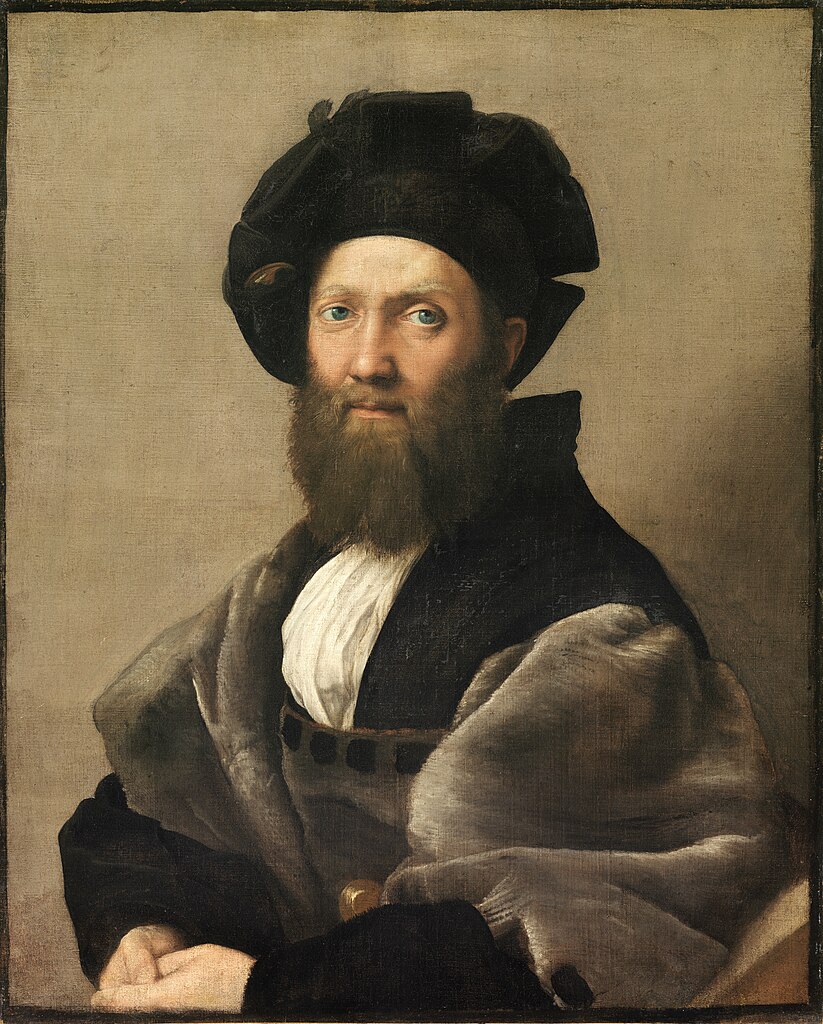
One of my favorite books of all time is The Compleat Gentleman, by Brad Miner, now Senior Editor of The Catholic Thing. In his book Mr. Miner spends one of his chapters discussing a manual for courtiers written during the Italian Rennaissance by Baldassare Castiglione, who coins what I think is a very useful term: Sprezzatura. I am forever in Mr. Miner's debt for this (and for a number of other ideas of his that I've incorporated into my life).
Sprezzatura is the art of concealment. It is doing difficult things and making them seem easy. In Castiglione's own words it "conceals art, and presents what is done and said as if it was done without effort and virtually without thought."
Consider this scenario: You're eating a picnic lunch by the river. A truck pulls up and a man lumbers out, trips on a rock and staggers to the back. He drags out a canoe and drops it on his foot, swearing. He hauls the canoe over rocks, scraping and sliding, until he plops it in the water. It starts to drift away. He swears again and wades in, and perches the canoe half up on the bank. He looks around, confused, and then wanders back to the truck. He rummages around for a paddle, finds it, lumbers to the canoe, plops in and almost capsizes it, and then paddles off, the little boat zig-zagging with every stroke of the paddle.
Now this: a man pulls up in a truck, lifts a canoe out of the back, perches it on the bank, returns for a paddle, sits down and effortlessly slides off into the current with a low "swish."
The second man exhibited sprezzatura.
Now as Stoics should it matter? No... I suppose not. On the other hand we're not Cynics. We aren't throwing lentil soup on people to make a point, as Crates did to Zeno.
I submit that since the Renaissance saw a resurgence of interest in Stoicism, and since virtue involves becoming an excellent human, we might consider doing what we do with a little style.
"But all is opinion."
True, but that statement is NOT synonymous with "It doesn't matter what other people think."
If a Stoic takes part in public life, for example, what other people think "matters" a great deal, since the Stoic is attempting to influence them. Remember that we are not meant to sit alone on our mountain tops in quite contemplation. We're meant to be serving our brothers and sisters, down in the belly of society. To do that it may be useful to be thought of as dignified and competent.
Take as your example our very own philosopher king. I suppose that Marcus Aurelius probably appeared in public in tunic AND toga, the formal garment. He certainly appeared so for his bust. Why bother? Because he wasn't a Cynic. He was the Emperor of Rome. He had a role to play. He LOOKS like an emperor.

Now he did this simply and modestly. He sold off imperial treasures to fund wars rather than raise taxes. He avoided gaudy display. He was both aware of his image and he was stoic about it. He controlled how he presented himself and other people controlled how they percieved him.
He also displayed Sprezzatura in his philosophical life. He doesn't seem to have been a Stoic evangelist. He was widely admired for being the same at the end of his reign as he was at the beginning. He had a reputation for fair play and magnanimity. He concealed the source of his excellence: Stoicism. His great work was meant to be destroyed with him. Had his friends not disobeyed him The Meditations wouldn't exist. That, friends, is sprezzatura. That's style.

Take as another example that descendant of the Roman emperor: the Pope. One thing that Pope Francis has been widely praised for is his simple dress. Notice, however, that he still looks like the Pope. He's dressing to be seen, but he dresses simply. Sprezzatura.
* * *
All images are public domain
Friday, January 30, 2015
Only Apologize Once
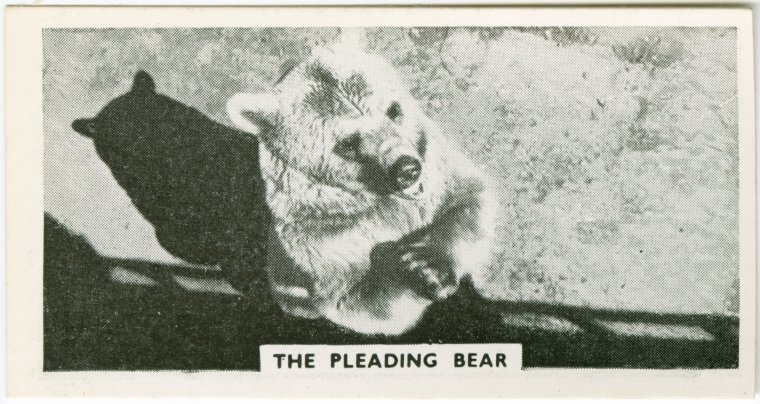
I read this excellent entry at Manly Distribution on apologies and it got me thinking about my own apology practice.
I've noticed that my best apologies occur one time. I admit fully and completely my mistake and I say that I've learned from the experience. After that if the person brings it up again I say something like "yeah, I remember that" or "I thought I already apologized for that." The other person may accept or reject my apology. The relationship may continue or it may stall, or it may cease all together, but I won't grovel.
The key here is to own the behavior completely. Some people use an apology as a sort of get out of jail free card. They insult you, then they off handedly say "just kidding." Then they insult you again. The apology isn't sincere. I've done this myself and it makes me feel cheap. So the goal is a sincere, complete apology delivered one time only.
This practice isn't universal; if I do something major I understand that my apology will be a process rather than a one-off event. This hasn't happened in recent memory, but in the past I have occasionally said something horrible and it took some time to convince the other party that I was speaking without thinking and that I was truly contrite. Then there was that time I backed my uncle's van into a solid post. That was a tough one. Then there was that time I got a guy's expensive radio controlled airplane stuck in a tree...
What I'm talking about here is different; I am describing the everyday apology. We're all human and we all make mistakes. Sometimes the people we have wronged need to hear that we understand that we have wronged them, that we care about them and that we will try not to wrong them in the future. This keeps relationships alive and, in my experience, can even strengthen them.
As Stoics, of course, we think about being "wronged" differently, but the idea still holds relevance for us. Suppose I lend something to my friend and he breaks it. He doesn't apologize and he doesn't replace it. I've learned not to lend him anything. That's good information to have. Suppose, instead, that he breaks it, apologizes and maybe even offers to replace it. I will likely lend him something again. I've seen some reflection on his part, so that particular aspect of our relationship may continue. This is also good information to have.
Apologies are, therefore, necessary and useful. What is NOT useful is grovelling. If we wrong others and they can't let go of the wrong, or if they bring it up over and over again they are trying to punish us. Fair enough, if that's what they want to do, but if the act in question was a minor one and if we apologize fully for it the matter is now their problem, not ours. We've done all we can do.
Of course this also means that I must accept the sincere apologies of other people with as much grace as I expect from them, and I do. I actually feel pretty good about it. Letting go of past hurts is, after all, a very Stoic thing to do.
* * *
Public domain image courtesy of the New York Public Library
Monday, January 19, 2015
Admiral Stockdale's Take On His Debate Performance

I found an interview that James Stockdale did with Jim Lehrer in 1999. The transcript is here.
I'll let the Admiral speak for himself, but a few things did jump out at me.
1. He considered character to be far more important than specifics. A man of character can deal with specifics. He says that he doesn't get up in the morning thinking about Social Security.
2. He was a placeholder because Ross Perot needed a warm body in states that required a declared VP. He never expected to be in a public debate, and he wasn't terribly thrilled about it.
3. He and Perot never ever talked about politics.
4. He considered physical courage to be very important. If he ran a presidential debate he would ask the candidates about a time when they had to demonstrate physical courage.
5. He was very realistic about his performance. He was surprised to be there, but that's where those other guys lived. It is what it is.
6. He describes his time in the big central prison as the founding of a new civilization. They lost everything and had to start over. He is proud of what they accomplished.
7. His experience during the VP debates caused him to feel emotion. There were highs and lows. His way seems to have been that you experience the emotion and then you deal with it. The emotion seems to happen whether you like it or not, and then you use philosophy to manage it.
So for anyone who wants to know "How does a Stoic handle X or Y?" This is how a Stoic handles it.

* * *
The images used are official US government property, so I think that they are in the public domain.
Sunday, January 18, 2015
There Were No F**ks Given That Day
Sir-weasel posted this link over at the Stoic subreddit (note that Mr. Weasel warns us that the article contains "somewhat ripe language"):
Link to the article
Here is my response:
Upvote! I'll tell you why... this characterizes something I've noticed about the developing masculine subculture known as "red pill." My guess is that quite a few young men end up here because stoicism, or outcome independence, is discussed as part of the red pill outlook on life.
I listen to Joe Rogan's podcast (to me he is a modern day philosopher, the real thing, who gathers forward thinkers around him and discusses new ways of being). Anyway, he often uses the phrase "there were zero fks given that day!" I don't know that Mr. Rogan would call himself a red pill thinker; he certainly doesn't like parts of it, but he does seem to represent to me a large number of young men who are dissatisfied with modern culture. Sounds a lot like the founders of our own philosophy... My point here is that this "No Fks given" idea isn't some random meme; it's the tip of a cultural iceberg. It's a movement.
There is a shade of the "no F**ks given" idea that to me seems to be in conflict with Stoicism. A cartoon accompanies the article. It shows a character floating away with a bunch of helium balloons in one hand and a raised middle finger in the other. The character is flipping off a large number of people and going his own way.
Aurelius tells us that we will often meet people who behave in negative ways, and that we are to remember that they do this because they are ignorant of the good. Those are our brothers and sisters.
When we reject modern culture, or aspects of it, we do so because we feel that parts of it are aggressively colonizing our minds. So we here have revived a twenty-five hundred year old philosophy in response. That's a pretty bold move... it's a pretty clear rejection. Rather than see modern culture as the enemy, though, I think that we are directed to see the people who we don't want to emulate as ignorant of the good.
So perhaps the cartoon character could be smiling, open armed, and saying "I don't give a f**k, and you don't have to either."
Thanks for posting this and for stimulating my own thoughts. I look forward to hearing more from you.
I choose not to use profanity publicly. For me it seems to cheapen my thoughts. That's why I asterisk out the "f" word. Do what you like; I don't mind, it's just not for me.
Link to the article
Here is my response:
Upvote! I'll tell you why... this characterizes something I've noticed about the developing masculine subculture known as "red pill." My guess is that quite a few young men end up here because stoicism, or outcome independence, is discussed as part of the red pill outlook on life.
I listen to Joe Rogan's podcast (to me he is a modern day philosopher, the real thing, who gathers forward thinkers around him and discusses new ways of being). Anyway, he often uses the phrase "there were zero fks given that day!" I don't know that Mr. Rogan would call himself a red pill thinker; he certainly doesn't like parts of it, but he does seem to represent to me a large number of young men who are dissatisfied with modern culture. Sounds a lot like the founders of our own philosophy... My point here is that this "No Fks given" idea isn't some random meme; it's the tip of a cultural iceberg. It's a movement.
There is a shade of the "no F**ks given" idea that to me seems to be in conflict with Stoicism. A cartoon accompanies the article. It shows a character floating away with a bunch of helium balloons in one hand and a raised middle finger in the other. The character is flipping off a large number of people and going his own way.
Aurelius tells us that we will often meet people who behave in negative ways, and that we are to remember that they do this because they are ignorant of the good. Those are our brothers and sisters.
When we reject modern culture, or aspects of it, we do so because we feel that parts of it are aggressively colonizing our minds. So we here have revived a twenty-five hundred year old philosophy in response. That's a pretty bold move... it's a pretty clear rejection. Rather than see modern culture as the enemy, though, I think that we are directed to see the people who we don't want to emulate as ignorant of the good.
So perhaps the cartoon character could be smiling, open armed, and saying "I don't give a f**k, and you don't have to either."
Thanks for posting this and for stimulating my own thoughts. I look forward to hearing more from you.
* * *
I choose not to use profanity publicly. For me it seems to cheapen my thoughts. That's why I asterisk out the "f" word. Do what you like; I don't mind, it's just not for me.
Friday, January 2, 2015
Seeing Through The System

One of the things that Stoicism allows is a little objectivity. When we examine our own motivations and insecurities we begin to see them in other people. They don't necessarily see these things in themselves, though, and anyway we might be wrong. Perception is always suspect. With that caveat in mind, I offer the following:
I know a few people, high achievers, who are often worried about not measuring up. Maybe that insecurity is necessary to high achievement, or maybe it is necessary to some people in the sense that otherwise those particular people wouldn't have achieved.
For example, suppose there exist two equally successful athletes. One may have achieved "x" level of success through natural ability and moderate effort. The other, born with less potential, achieved "x" through single minded determination. He scorched the earth. He psyched himself up. He neglected relationships and personal development. He trained constantly. He sacrificed more.
I know some people in the latter category. This would often cause conflict, because when I achieved they would pick out flaws or cut me down in some way. I would respond defensively. We would then enter into conflict.
What ended the cycle is my realizing their need for validation. I began to compliment them on their achievements. At first nothing changed on their end, but instead of reacting defensively I'd shrug it off and move on. I repeated and repeated.
After about a year they began to compliment me back. Now we like each other. Actually they are pretty close friends. I like them. I can rely on them. They have my back. They're different people.
A key insight was my realization that what these people had in common was a rough childhood. They were picked on by their peers. The way they dealt with the harassment was to adopt an "I'll show them!" mentality. They applied themselves to their professions with a singleminded zeal. In addition to this it was their habit to stake out some mental safe space in their heads, which they defended with everything they had. The best defense is a good offense, in other words.
I made myself safe to them. They let me past the perimeter because I stopped attacking and started aiding in their own defense. I became a trusted ally.
I had seen through the system. I had found their motivation and manipulated it for our mutual benefit. I was the puppet master.
And do you know what I noticed, after I got a little distance from the whole thing? I was just like them. I cut down people who performed better than I did. I carved out a safe space and defended it like a zealot. And I did it for the same reasons that they did. Here I was judging their flaws and figuring out how to deal with them, and then congratulating myself for successfully doing it, when all the while I was just like them.
When things between us changed I'm not even sure that I prompted it. Maybe we all got sick of our old habits at the same time.
The system I had seen through was one of my own making.
It was like waking up to the world: I was never secretly superior. I was never the bigger man.
My old self would have considered this to be a disastrous revelation. My new self is very pleased by it. Why?
I'm not alone, and people can improve. That's a very good thing for the world.
* * *
Image is public domain
Wednesday, November 26, 2014
Mike Cernovich And Verbal Jiu Jitsu
Mike Cernovich is one of the most interesting podcasters on the internet. I don't agree with his every utterance, but he is whip smart and he speaks the truth as he sees it. His observations are often very original.
His take on how to manage verbal conflict is especially interesting. You can find it at the itunes store under "Danger and Play Podcast." Look for "The Gentle Art of Verbal Self Defense."
He uses a phrase that seems paraphrased from Epictetus (I think... sometimes I memorize a maxim and then forget who authored it). When somebody lies about him he says "Dude, there's enough true stuff to call me on. Why lie?" Epictetus advises us to use a similar strategy. "It's a good thing he doesn't know me better or he would have had much more to criticise." That's a very liberal paraphrase, but you get the idea.
An extension of this idea is the "agree and amplify" technique, where you take your opponent's insult to a silly conclusion.
"You're fat."
"What? A weather system blew in to my northern hemisphere and garbled your transmission. Could you say that again? Hey, careful of my gravitational field!"
He also recommends a very stoic keeping of one's wits. Don't get mad. When confronted say "Okay, make your points. You done yet? Get it all out."
Mr. Cernovich's views on gender relations, homosexuality, "geek culture" and the like seem to be moderating, a trend that I like to see. Here we have a man who is molding himself in front of us. He is deliberately constructing a better Mike Cernovich and he is doing it out in the open, warts and all. When his views change he says so and he owns his past behavior.
What more could you want in a human being?
We would be much better off if we followed Mr. Cernovich's example and ceased playing verbal "gotcha" with each other. I write this while holding a brown belt in verbal gotcha, so this is a case of "physician heal thyself."
His take on how to manage verbal conflict is especially interesting. You can find it at the itunes store under "Danger and Play Podcast." Look for "The Gentle Art of Verbal Self Defense."
He uses a phrase that seems paraphrased from Epictetus (I think... sometimes I memorize a maxim and then forget who authored it). When somebody lies about him he says "Dude, there's enough true stuff to call me on. Why lie?" Epictetus advises us to use a similar strategy. "It's a good thing he doesn't know me better or he would have had much more to criticise." That's a very liberal paraphrase, but you get the idea.
An extension of this idea is the "agree and amplify" technique, where you take your opponent's insult to a silly conclusion.
"You're fat."
"What? A weather system blew in to my northern hemisphere and garbled your transmission. Could you say that again? Hey, careful of my gravitational field!"
He also recommends a very stoic keeping of one's wits. Don't get mad. When confronted say "Okay, make your points. You done yet? Get it all out."
Mr. Cernovich's views on gender relations, homosexuality, "geek culture" and the like seem to be moderating, a trend that I like to see. Here we have a man who is molding himself in front of us. He is deliberately constructing a better Mike Cernovich and he is doing it out in the open, warts and all. When his views change he says so and he owns his past behavior.
What more could you want in a human being?
We would be much better off if we followed Mr. Cernovich's example and ceased playing verbal "gotcha" with each other. I write this while holding a brown belt in verbal gotcha, so this is a case of "physician heal thyself."
Subscribe to:
Posts (Atom)